



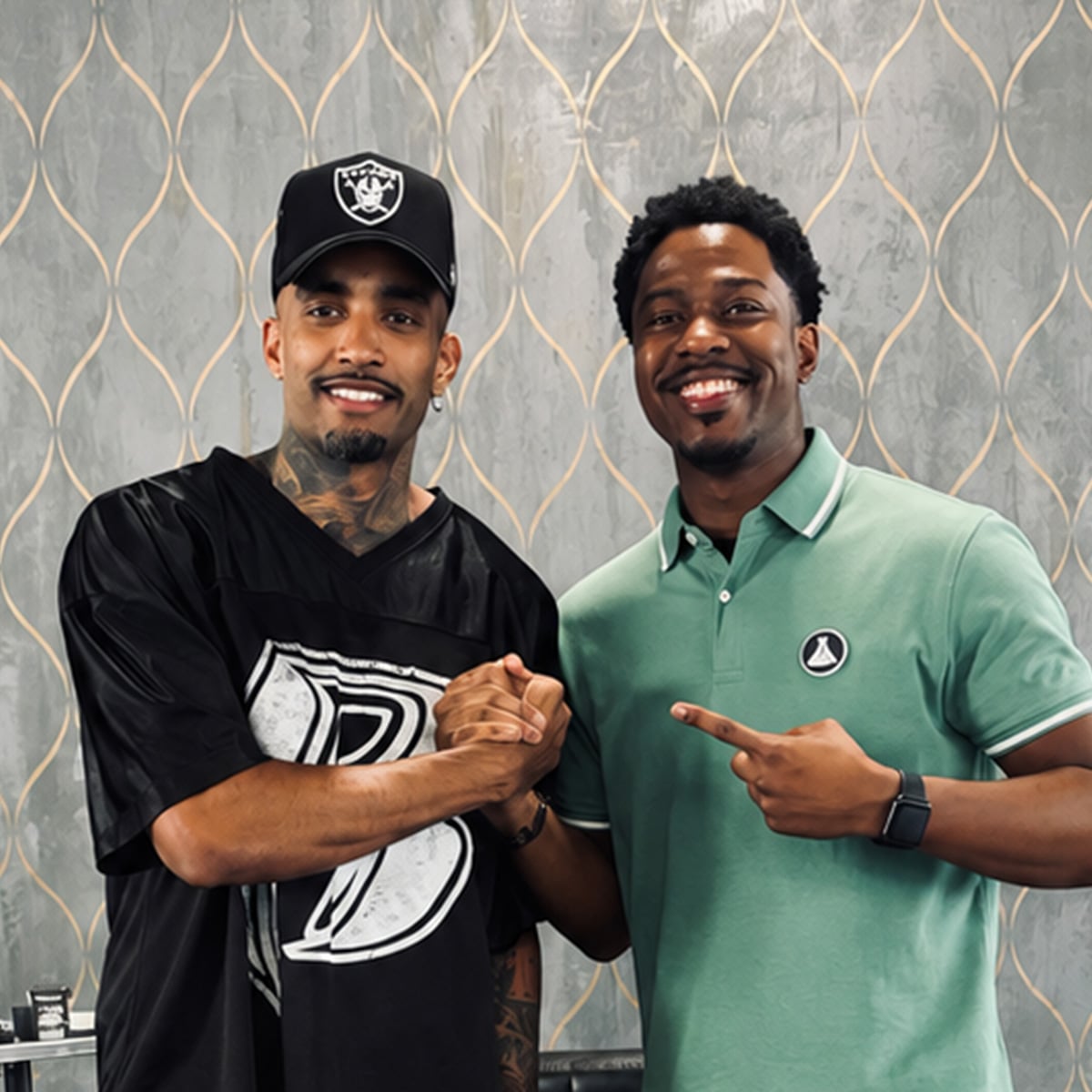
How to Build a Six-Figure Barber Career: 4 Lessons on Relationships, Consistency + Character


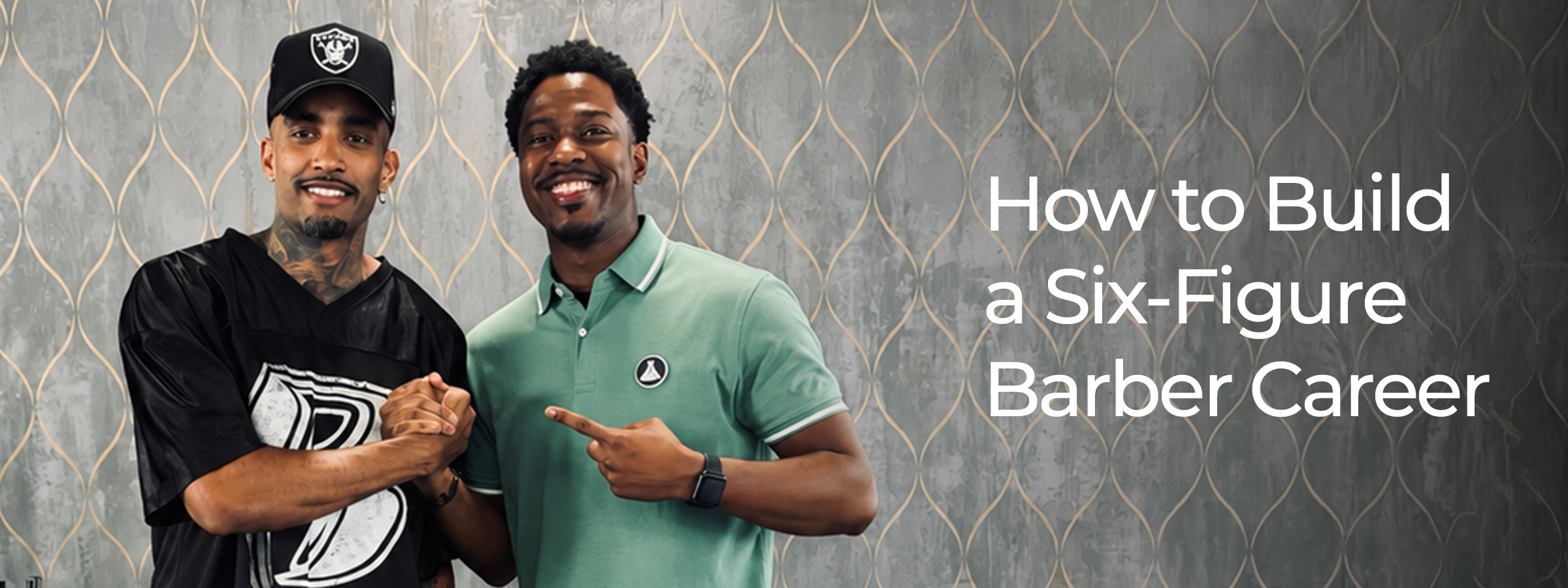
Two barbers, two different paths, one conversation that will make you rethink what actually makes a career in this industry.
When Corey Sturkey (@BonezDaGoat) and James (JT) Taylor sat down at Marlo Beauty Studios for episode 6 of Pro2Pro: The Podcast, they didn't talk about fades or product lines. They talked about what determines whether you make it in this business: who you are when nobody's watching, and the person you work to become.
Corey is a second-generation barber who watched his dad work the worst station in a Florida shop and turn it into the busiest chair in the building. Corey went from $3 haircuts in a garage to a signed educator with L3VEL3 and Andis, built and sold his own shop and now travels full-time as a platform artist and educator.
JT was one step from becoming a Detroit police officer before something made him walk out of the academy and into barber school the following week. He's now an instructor at Hair Lab Detroit Barber School and went back for 1,000 extra hours to earn his educator license. His ‘why’? Pouring into people the way he wished someone would have poured into him.
Here are the five things they want every barber to hear.
1. Give Yourself Grace
Corey's first real haircuts happened in his dad's garage, with clippers so hot he had to cool them in the mini fridge between cuts. His uncle left with scabs on his forehead. A neighbor kid went around telling the whole block how bad the cuts were.
His dad's response became the line Corey never forgot: "Don't feel bad…you're gonna get real good. And when you do, he's gonna come back and ask you for a haircut." Nine years later, that’s exactly what happened.
JT tells his students the same thing without softening it. The moment you accept that this is just the beginning, and every day you put deposits in, you get progressively better, you've already won. JT's rule: you either win or you learn.
2. The Best Barber Is Never the Busiest One
This is the one that hits hardest for both of them. The busiest chair in the shop rarely belongs to the most technically-skilled barber. It belongs to the one who remembers a client's birthday. Who asks how the job interview went, who texts three days later just to check that the haircut still looks good.
"We’re not selling a service," Corey says. "We’re giving an experience. The haircut should be the cherry on top." People don't remember the haircut, they remember how you made them feel.
JT agrees, saying he has had grown men cry in his chair because the barbershop is one of the only places they feel safe. "You can change the trajectory of someone's life in one conversation,” he shares. “We should not take that lightly at all."
3. Relationships Make You Rich
Every brand deal Corey has landed came through someone vouching for him when he wasn't in the room. His Andis deal wasn't built from a pitch deck or a campaign. It was his friend Phil - an engineer at Andis whom Corey had taught to cut hair years earlier - who personally referred Corey to the CEO of Andis, who sent Corey a DM: "Phil mentioned you, and here we are."
That's why Corey shook every hand at his first barber show back in 2013, handing out a flyer of his bio and best cuts to everyone he met. Nearly every one of those people is now a close friend, a mentor or a part of his network.
The cycle keeps going: when a Canadian shear company offered him an ambassador deal he couldn't take because of another brand contract, he didn't just decline. Instead, he responded "I have somebody for you," and handed the opportunity to another barber. As Corey puts it: "You’re not an OG if you don't put nobody on. You are just old."
4. Skill Is Teachable, Character Isn't
Social media has a generation growing up believing perception is reality - that you can curate a page and build a character that looks like you have it together. But when you put the phone down and stand in front of the mirror, whoever you actually are is still standing there looking back at you.
Mentorship isn't about technique. It's about helping someone become the kind of person who can handle what success brings. JT didn't go back for 1,000 hours of educator training to learn more about fades. He did it because he kept seeing young barbers graduate with nobody guiding them as people. They didn't know how to do their taxes, set a boundary or have a hard conversation.
"I have a responsibility to my community," JT says. "I knew I could not settle for mediocre."
The greatest leaders are the best servants. Build a career by serving the person in your chair first, the rest tends to take care of itself.
Catch the full conversation with Corey and JT on the Pro2Pro: The Podcast, available on YouTube and streaming everywhere. Stay connected at Pro2Pro for more conversations built for the professional behind the chair. And make sure you have got the right tools and products behind you at www.marlobeauty.com.
| SHOP: | www.marlobeauty.com |
| SHARE: |
|
