



Is Bartering the Smartest Business Move You Haven't Tried Yet?


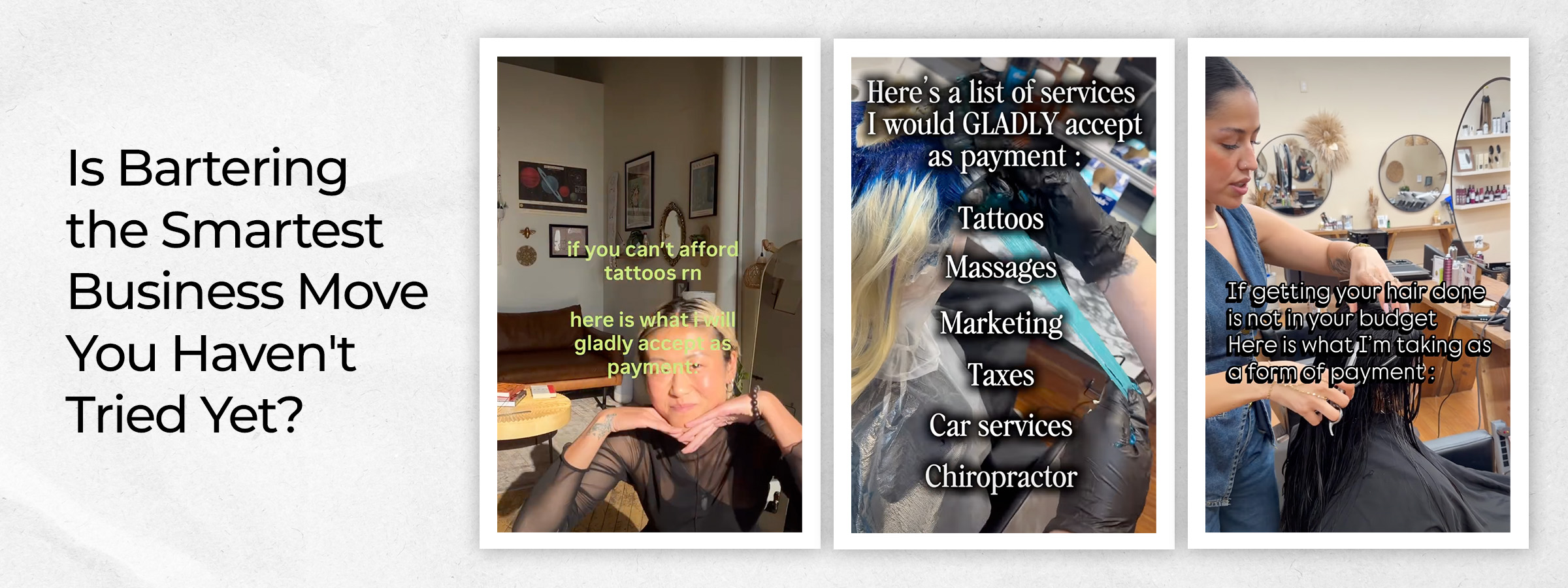
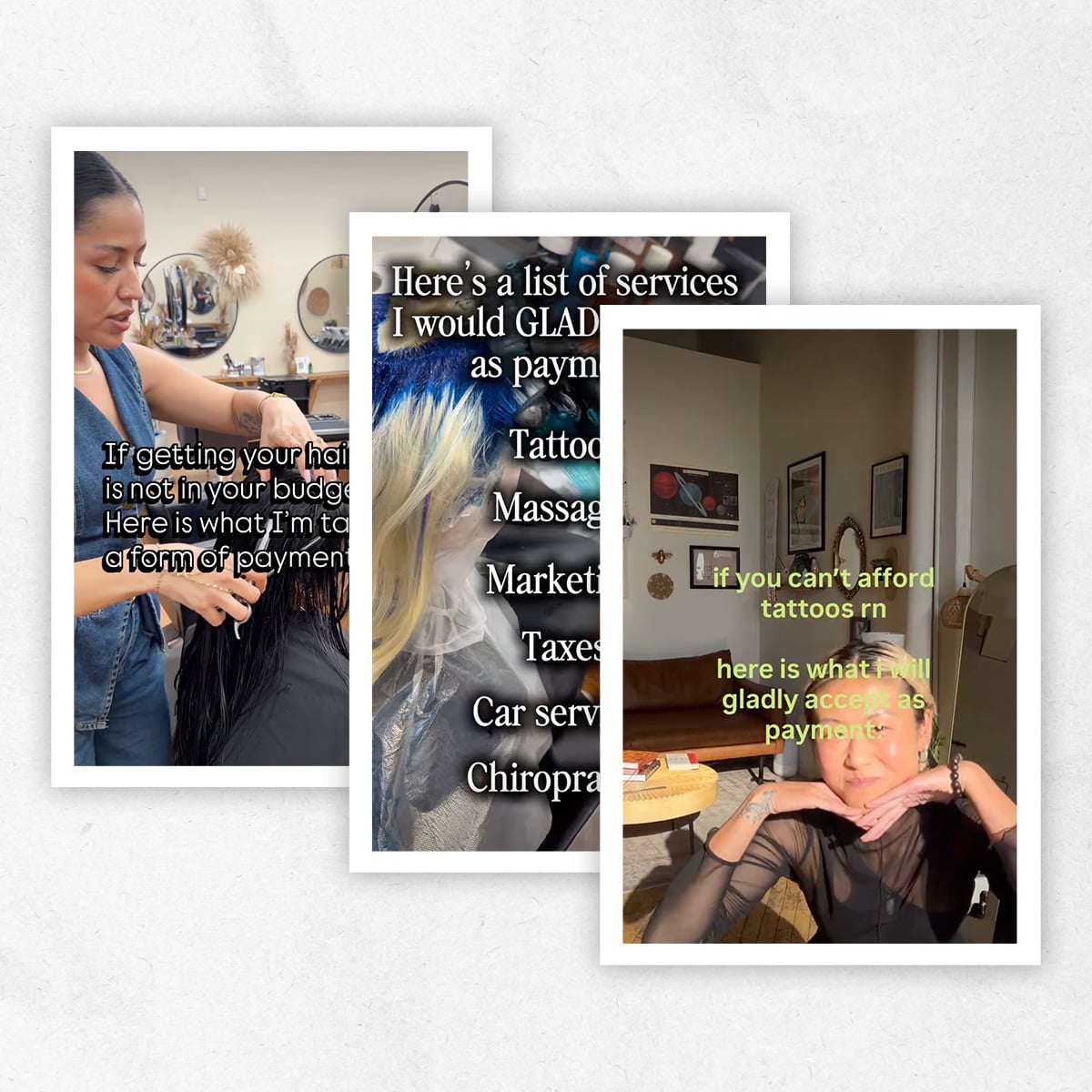
Bartering is having a moment on social media right now, with entrepreneurs across every industry posting about the trades they’d accept in exchange for their services. We took the question straight to the people working behind the chair, asking, “Have you ever bartered your services? Is it a smart business move or does it devalue what we do?” We were not prepared for what came back.
Stylists, barbers, estheticians and nail techs showed up with stories about trading for massages, photography services, car detailing and even fresh vegetables and meat! The conversation showed us something: bartering is not just a trend that started recently across socials. It’s a tool a lot of professionals have quietly been using for years, and the current "barter szn" wave is just exposing a growth strategy many love!
Here is what our industry had to say.
Break Out of the ‘Money Matrix’
Stylist and nail tech Kimberly Celeste Lottig put it perfectly. "I think it adds value to what we do, and elevates us slightly out of the money matrix. I barter for bread, local products, reflexology sessions and mani for mani."
The "money matrix" is a phrase worth sitting with. When everything costs more and clients are watching their budgets as closely as you are watching yours, there is something genuinely freeing about stepping outside the structure entirely. You’e still exchanging value, you’re just doing it differently.
Build Real Community
Stylist and colorist Jules Christman said it best. "Collaborating and trading services helps me open my mind to so much more, like strategy on marketing, advice on photography angles or even sharing experiences as someone who provides services. It almost gives you a sense of community, and thus feeling supported. There is so much to gain from each other on top of the exchange of the service itself."
As Jules notes, you’re getting something in return for your services, yes, but sometimes even more valuable is building a relationship, cross-promoting with a local business and expanding how you think about your own value. Jules's rule of thumb: if the trade equals the cost of your product, it is worthwhile. Hard to argue with that math.
Stylist Dada Riddick expanded on this, saying "I think bartering is an awesome way to build relationships and a brilliant networking tool. When people want to collaborate, create art or bring an idea to life, they may not always have the funds to fully execute it. Bartering can help bridge that gap."
What was Dada’s biggest mindset shift for someone who has never tried bartering? "Remember your why. When you are truly in business to create freedom for yourself, you begin to understand the importance of delegation, collaboration and working with people who are strong where you are weak. Things get done much faster when you remove your ego and fear from the equation and allow the right people to help you build."
That is an entire business philosophy we can stand behind.
What Are People Actually Trading?
Stylist Brittany Renee Jenkins has traded for lawn care, yard work and car detailing. "I love trading for services - it keeps things tax free!" she says. She also accepts tips in the form of snacks, drinks and her favorite coffee. "I've made that known to many clients, and they often bring my favorite coffee or snack and still tip."
Stylist Juliette Ramirez has a standing arrangement with a massage therapist. "I usually book her as the last appointment of the day. When we finish her hair she comes to my place and gives me a massage. It has been AMAZING on my extra busy days because that is usually when I need the relief most." She also only barters with businesses close to her area so they can cross-promote each other.
Think about what four hours behind the chair is actually worth. One stylist in our community did that math and traded a color service for a four-hour deep clean of her apartment. She also traded two clipper cuts for the custom sign in her suite.
Prevent Sideways Deals
Bartering works best when both sides feel like the trade is equal. The moment one person feels like they are putting in more than they are getting back, things get awkward fast.
Stylist Beth Beall Walch keeps it real. "Bartering can be great if it is service for service and dollar for dollar,” she says. “It gets tricky when one is adding more to the arrangement than the other or if one is unhappy with the outcome."
Here is a scenario worth thinking about. You set up a trade with someone whose service you love. It works beautifully for a while, then their situation changes. Maybe their rates go up or the arrangement just runs its course. Suddenly what used to feel like a win starts to feel uncomfortable or worse, is costing you money. Even the most natural barter relationships need a little structure from the start.
Don’t be afraid to put it in writing! Agree on the dollar value of the trade and draft a simple agreement. Track the hours and cost of goods so both sides always feel like the trade is fair. A little structure is what keeps a good barter relationship going long term. Check in as you go, and if the arrangement stops working for one of you, say so before it turns into resentment.
The Bottom Line
Bartering is not new, and it is not just a trend born out of a hard economy. It’s a creative, community-driven way to exchange value that has been working behind the scenes of this industry for a long time. The stylists doing it well are saving money, building relationships, growing their businesses and taking care of themselves in the process.
Ready to find your barter buddy? Start local with someone whose work you already respect. Be clear about the value on both sides and write up an agreement to define boundaries.
FAQ: Bartering Services in the Beauty and Barber Industry
Is bartering a smart business move for stylists and barbers, or does it devalue the service?
Most professionals who barter regularly say it adds value rather than taking it away, as long as the trade is equal on both sides. Problems only come up when one person feels like they are giving more than they are getting.
What do beauty professionals typically barter for?
Common trades include massages, car detailing, lawn care, photography, cleaning services, custom signage, and other services from local businesses. Some also barter service for service within the industry, like a haircut for a haircut.
How do you figure out if a barter trade is fair?
Assign a real dollar value to both sides of the trade before you start, based on what you would normally charge or pay. Track hours or sessions and check in periodically to make sure both people still feel it is even.
Should a barter agreement be in writing?
Yes. A simple written agreement covering the dollar value of each service and how often the trade happens protects both sides and prevents the kind of misunderstanding that ends barter relationships.
Are there tax implications for bartering services?
Bartered services can still count as taxable income in the eyes of the IRS, even though no cash changes hands. This article reflects the experiences shared by beauty professionals in our community, not tax advice. Talk to a licensed accountant about how bartering applies to your specific business.
What is "barter szn"?
"Barter szn" is a term circulating on social media right now, referring to the current wave of entrepreneurs openly trading services and products instead of paying cash. For beauty professionals, this is less of a new trend and more of a name for something many have already been doing for years.
Stay connected with the Marlo Beauty Supply community for more real conversations, resources and education built for the professional behind the chair. Visit us at www.marlobeauty.com and stay connected at Pro2Pro.
| SHOP: | www.marlobeauty.com |
| SHARE: |
|
