



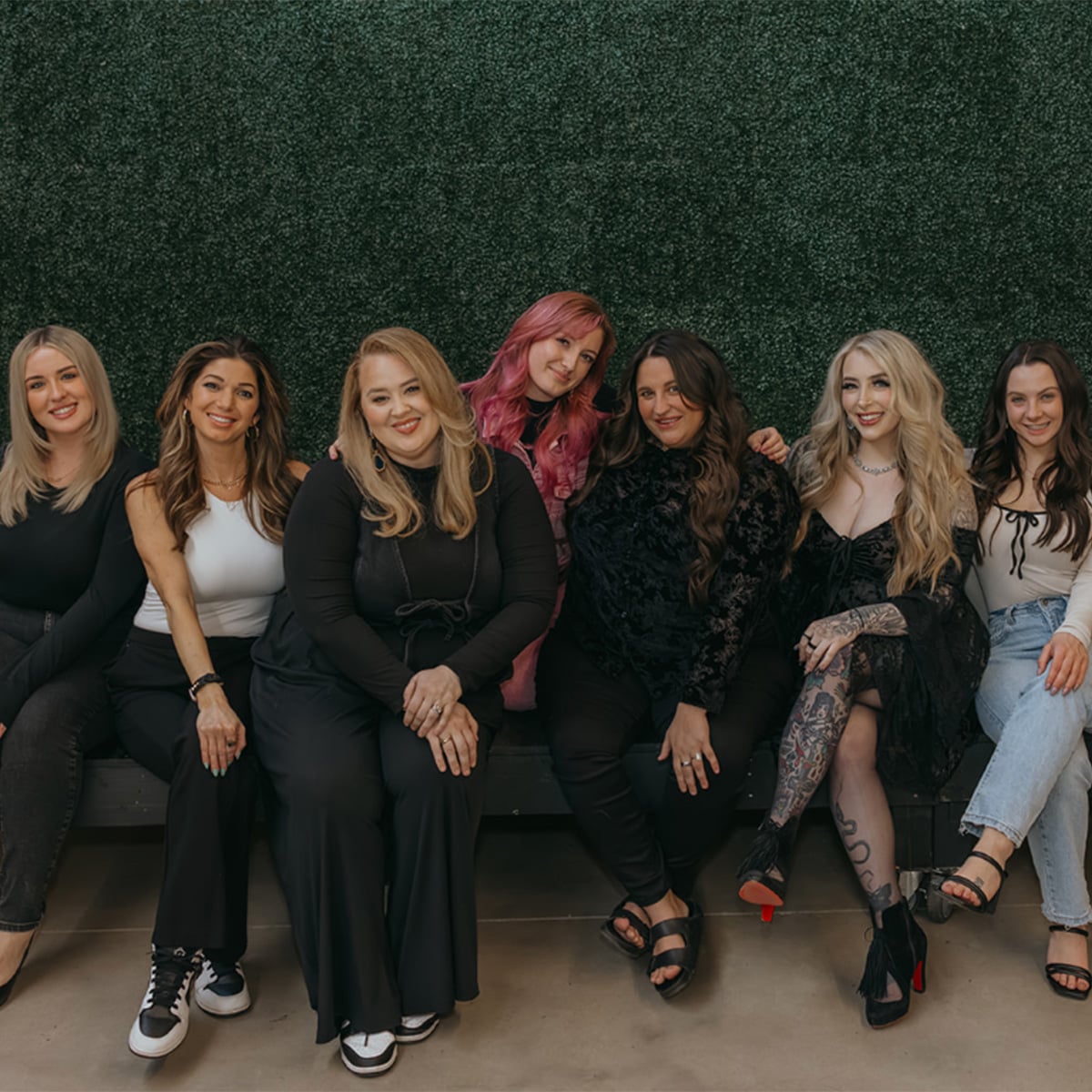
Is Salon Ownership Worth It? Gifts and Lessons from Building a Successful Salon


I keep seeing posts about how hard it is to own a salon. “Salon ownership is exhausting.” “Nobody understands what owners go through.” “Your employees will never care as much as you do.” “Everyone wants something from you.” “Don't open a salon unless you want to work 24/7.”
And listen, I get it; I've actually been one of those voices before. I've gone through seasons where I was completely fried and burnt out and talked very publicly about how hard salon ownership can be. I have probably even discouraged people from doing it at times.
But lately I've been thinking about how much we talk about the hardships of salon ownership and how rarely we talk about the gifts - because there are so many gifts.
I've experienced an incredible amount of freedom because I own a business. I've been able to create jobs, build a culture, develop people’s skills, make money, take risks, change my schedule, build other businesses and design a career and life that actually work for me. That doesn't mean it's always easy - it means the hard parts aren't the entire story.
I also think part of the reason salon ownership gets such a bad reputation is because a lot of salons are opened for the wrong reasons. Some stylists open salons because they think they'll make more money. Then they quickly realize that revenue and profit are two completely different things. Running a profitable salon requires business knowledge, leadership, systems, financial literacy and a completely different skill set than doing great hair. Many salon owners still make the majority of their personal income behind the chair.
Others open because they worked in a toxic salon and have something to prove. They think, "I'll open my own salon and do it better." That motivation might get you through opening day, but I don't think it's enough to carry you through years of ownership.
Then there's the unicorn - the stylist who built a great book first. They understand what it takes to actually build a clientele because they've done it. They worked the nights, they worked the weekends, they hustled, they learned how to retain clients and market themselves, they saved their money. Then they open a salon, strategically cut back some of their hours behind the chair and use that time to lead and build a great team.
That's a completely different foundation to build from. And when you build from the right foundation, salon ownership can give you something incredible - freedom.
Freedom doesn't mean you never have problems. It doesn't mean nobody quits, clients never complain, payroll isn't stressful or the toilet never breaks.
To me, freedom is being able to experience those things without feeling completely controlled by them. A long time ago, I read “The Four Agreements.” At the time, I don't think I realized how applicable that book would eventually become to business and leadership - sometimes when something becomes really popular, we miss how much truth is actually in it. The four agreements from the book are simple:
2. Don't make assumptions.
3. Always do your best.
4. Be impeccable with your word.
I've realized that whenever I'm really suffering in my business, feeling trapped, angry, resentful, or the complete opposite of free, I can almost always trace it back to one of these agreements I'm violating.
1. Don't Take Anything Personally
This is where I think so many salon owners spiral. An employee leaves and you take it personally; someone doesn't like a policy and you take it personally; a client complains and you take it personally; someone isn't performing the way you hoped and somehow it becomes a reflection of you.
I used to let things in business bother me for days, weeks, sometimes months. Now they bother me for seconds, minutes or hours. That's progress.
You have to constantly remind yourself that almost nothing in business is personal. People make decisions based on their own lives, needs, fears, finances, families, goals and circumstances. The more I stopped making everything mean something about me, the more freedom I experienced as an owner.
2. Don't Make Assumptions
This might be the most important agreement in salon ownership. When a client complains, don't immediately assume the stylist did something wrong. Don't immediately assume the client is wrong either.Hear both sides. Look at what actually happened. Where did communication break down? Was the consultation thorough enough? Was the policy clear? Did the stylist need more education? Did the guest understand what was realistically achievable? Was there a system that could have prevented the problem?
I believe people don't fail nearly as often as systems fail. As an owner, instead of looking for someone to blame, look for the system that needs to get stronger. Sometimes the answer is more training, sometimes it's better communication, sometimes it's a stronger policy. Sometimes nothing actually went wrong and you just have an unhappy person. But you won't know until you stop assuming and start investigating.
3. Always Do Your Best
Your best is going to look different depending on the season you're in. This has been a huge lesson for me.
I used to think being a good owner meant I had to personally have my hands in everything. But eventually that actually makes you a worse leader because you're spread so thin that you're not doing anything particularly well.
I recently realized I was dropping the ball on some of my marketing responsibilities, but I have someone on my team who is completely capable of handling them, so I told her to handle it so I can focus on the big picture. That is my best right now.
So hire great people, give them responsibility and trust them. Then get out of their way. Your team actually benefits from seeing that you're human and that you don't have to be the best person in the room at everything. There's freedom in realizing that your job isn't to do everything.
4. Be Impeccable With Your Word
If you tell your team you're going to coach them, coach them. If you schedule a check-in, SHOW UP, don't continuously push it off because something else came up. If you promised education, provide education. If you told someone you'd help them grow, make time to actually help them grow.I think owners sometimes become frustrated when their teams aren't performing the way they want, but it's worth asking yourself whether you're holding up your end of the relationship, too.
Your team needs to be able to trust your word. Leadership becomes a lot easier when people know that if you say something, you mean it.
Ownership Isn't Better. It's Just Different.
I want to make something really clear: you do not have to own a salon to be successful in this industry.If you have an amazing commission job where you're making great money, you love your clients, you have benefits, you go home at the end of the day without worrying about payroll and you're happy, that’s amazing.
If you're a booth renter and love the independence without having to manage a team, amazing.
If you want a suite, amazing.
If your dream is to build a 50-chair salon, amazing.
I think we've spent too much time trying to convince everyone that our way is the best way - it's not. The best business model is the one that aligns with the life you actually want, and there is something in this industry for everyone.
But I also don't want someone who genuinely dreams of owning a salon to abandon that dream because the loudest voices on the internet are telling them how miserable they're going to be.
Salon ownership has given me some of the greatest gifts of my life.
It has challenged me to become a better leader. It has forced me to understand myself. It has taught me how to have difficult conversations, how to let people go, how to trust people, how to build systems, how to manage money and how to stop trying to control everything around me.
Most importantly, it has given me freedom. Not freedom from problems - freedom in how I respond to them.
If salon ownership is something you genuinely want, don't let someone else's burnout convince you that you're going to hate it. Go into it for the right reasons. Build your own clientele first. Learn the business side. Save money. Learn how to lead. Create systems. Give yourself enough time away from the chair to actually run the company you're building.
And understand that there will absolutely be seasons when you question everything. I've had them, too.
But there will also be moments when you look around at the people you've helped grow, the careers you've helped build, the clients you've served, the culture you've created, and the life your business has allowed you to build and think, "Wow. I actually did this."
We should talk about that part more, too.

Gina Sicard (@iamginabianca), Pro2Pro Editorial Contributor
Gina is a veteran salon owner with a proven track record of building strong salon cultures, delivering meaningful education and mentoring top performing stylists. Gina’s mission is to provide inspiration, resources and real world strategies for salon owners and stylists who want to grow.
| SHOP: | www.marlobeauty.com |
| SHARE: |
|
